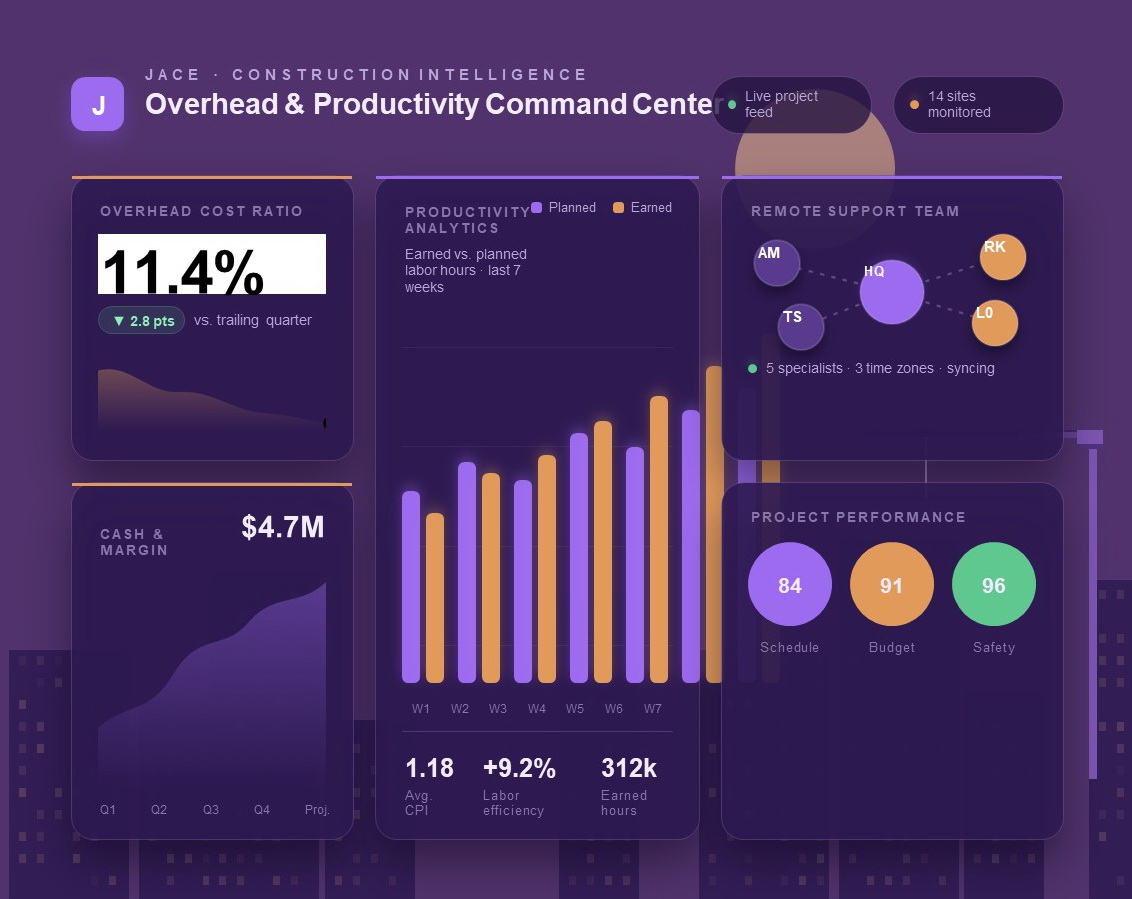
How Contractors Can Reduce Project Overheads Without Compromising Performance
Introduction
In today's highly competitive construction industry, contractors face increasing pressure to deliver projects faster, maintain quality standards, and protect profit margins. At the same time, rising labor costs, inflation, material price fluctuations, equipment expenses, and administrative burdens continue to increase project overheads. Many construction companies focus heavily on reducing direct project costs while overlooking the significant impact of indirect costs and overhead expenses. Effective overhead management is one of the most powerful ways to improve project profitability without affecting project quality or client satisfaction. This article explores practical strategies contractors can use to reduce project overheads while maintaining operational efficiency and project performance.
What Are Construction Project Overheads?
Project overheads are indirect costs required to support project execution but cannot be directly assigned to a specific work activity. Common construction overheads include:
- Site Management Staff
- Temporary Facilities
- Project Administration
- Communication Costs
- Equipment Support
- Document Control
- Office Expenses
- Utilities
- Travel Expenses
- Insurance
- IT Systems
Although overheads do not directly produce construction work, they significantly impact project profitability.
Why Overhead Control Is Important
Even a well-executed project can become unprofitable if overhead costs are not properly managed. Poor overhead control may result in:
- Reduced Profit Margins
- Cash Flow Problems
- Competitive Disadvantages
- Increased Tender Prices
- Lower Business Growth
Contractors that effectively manage overheads often achieve stronger financial performance and greater competitiveness.
Understanding the Difference Between Direct and Indirect Costs
Direct Costs: Direct costs are directly related to project activities. Examples include:
- Labor
- Materials
- Equipment Usage
- Subcontractors
Indirect Costs (Overheads): Indirect costs support project operations. Examples include:
- Site Offices
- Project Managers
- Administrative Staff
- Document Controllers
- IT Infrastructure
Reducing unnecessary indirect costs can significantly improve profitability.
Strategy 1: Improve Project Planning
Poor planning often creates unnecessary overhead expenses. Examples include:
- Extended Project Durations
- Idle Resources
- Additional Supervision Costs
- Rework
A well-developed project schedule helps reduce inefficiencies and improves resource utilization.
Recommended Actions
- Develop realistic baseline schedules
- Use Primavera P6 or MS Project
- Monitor critical path activities
- Update schedules regularly
Better planning often translates directly into lower overhead costs.
Strategy 2: Strengthen Project Controls
Projects without effective controls often experience:
- Delays
- Cost Overruns
- Resource Waste
- Poor Decision-Making
Project controls provide visibility into project performance and support timely corrective actions.
Benefits
- Improved Schedule Control
- Better Cost Monitoring
- Enhanced Reporting
- Reduced Risk Exposure
Strong project controls help prevent overhead escalation.
Strategy 3: Reduce Project Duration
Time is one of the largest contributors to project overheads. Every additional week on a project may increase costs associated with:
- Site Management
- Temporary Facilities
- Security
- Utilities
- Administrative Staff
Reducing project duration can generate significant savings.
Recommended Actions
- Monitor critical activities closely
- Resolve issues quickly
- Maintain procurement schedules
- Implement recovery plans when necessary
Shorter project durations generally result in lower overhead costs.
Strategy 4: Utilize Remote Construction Support Services
Many contractors maintain large support teams for functions that can be performed remotely. Examples include:
- Planning & Scheduling
- Quantity Take-Offs
- Estimating
- Document Control
- Project Reporting
- Contract Administration
Outsourcing these functions can reduce staffing costs without affecting project performance.
Benefits
- Reduced Payroll Costs
- Lower Office Expenses
- Flexible Resource Allocation
- Access to Specialized Expertise
Remote support services are becoming increasingly popular among contractors seeking greater efficiency.
Strategy 5: Improve Procurement Management
Procurement delays frequently increase project overheads. Common consequences include:
- Extended Site Presence
- Idle Labor
- Equipment Downtime
- Schedule Delays
Recommended Actions
- Develop procurement schedules
- Identify long-lead items early
- Monitor supplier performance
- Maintain procurement tracking systems
Effective procurement management supports cost control.
Strategy 6: Increase Productivity
Low productivity increases both direct and indirect costs. Productivity issues may result from:
- Poor Supervision
- Inefficient Workflows
- Material Shortages
- Resource Conflicts
Recommended Actions
- Track productivity metrics
- Improve workforce planning
- Strengthen supervision
- Monitor performance regularly
Improved productivity often reduces project durations and associated overheads.
Strategy 7: Optimize Site Staffing
Many projects become overstaffed during execution. Excess staffing increases:
- Payroll Costs
- Accommodation Expenses
- Transportation Costs
- Administrative Burdens
Recommended Actions
- Conduct staffing reviews
- Match staffing levels to project needs
- Cross-train personnel where possible
Efficient staffing improves overall project economics.
Strategy 8: Implement Digital Construction Management Tools
Technology can reduce administrative workloads and improve efficiency. Useful tools include:
- Primavera P6
- Microsoft Project
- Power BI
- Procore
- Autodesk Construction Cloud
- SharePoint
Digital systems streamline reporting, communication, and document management.
Strategy 9: Improve Documentation and Communication
Poor communication frequently causes:
- Delayed Decisions
- Rework
- Scope Confusion
- Productivity Losses
Recommended Actions
- Maintain organized document control systems
- Conduct regular coordination meetings
- Track RFIs and submittals
- Use centralized communication platforms
Efficient communication reduces project inefficiencies.
Strategy 10: Monitor Overhead Costs Continuously
Many contractors focus on direct costs while paying limited attention to overhead expenses. Effective management requires regular monitoring of:
- Staff Costs
- Site Facilities
- Administrative Expenses
- Equipment Support Costs
- Utility Expenses
Continuous monitoring improves financial visibility.
Common Overhead Cost Drivers in Construction
Contractors should closely monitor:
- Schedule Delays: Longer projects generate higher overhead costs.
- Inefficient Resource Allocation: Poor planning often increases indirect expenses.
- Excessive Site Staffing: Overstaffed projects reduce profitability.
- Weak Project Controls: Lack of performance visibility increases risks.
- Poor Procurement Practices: Supply chain issues frequently create additional costs.
Identifying these drivers helps improve cost management.
The Role of Project Controls in Overhead Reduction
Project controls contribute directly to overhead reduction by improving:
- Schedule Performance
- Cost Visibility
- Resource Utilization
- Risk Management
- Decision-Making
Organizations with strong project controls typically experience lower overhead growth and improved project performance.
Benefits of Outsourcing Technical Support Functions
Many successful contractors outsource non-core support functions to improve efficiency. Common outsourced services include:
- Quantity Take-Off & Estimation
- Planning & Scheduling
- Project Controls
- Contract Administration
- Document Control
- Project Reporting
Benefits include:
- Reduced Fixed Costs
- Increased Flexibility
- Access to Specialized Expertise
- Improved Scalability
Outsourcing allows contractors to focus on project execution and client relationships.
Overhead Reduction Checklist
Before project commencement, consider the following:
- Baseline Schedule Developed
- Procurement Plan Established
- Staffing Levels Reviewed
- Project Controls System Implemented
- Documentation Procedures Defined
- Digital Tools Deployed
- Reporting Framework Established
- Outsourcing Opportunities Evaluated
These measures help improve project efficiency and profitability.
Conclusion
Managing overhead costs is essential for maintaining profitability in today's construction environment. Contractors that focus on planning, project controls, productivity improvement, procurement management, and efficient resource utilization are better positioned to reduce overheads without compromising project performance. In many cases, strategic outsourcing and remote construction support services provide an effective solution for controlling costs while maintaining access to experienced professionals. By continuously monitoring overheads and implementing proactive management strategies, contractors can improve competitiveness, strengthen financial performance, and deliver projects more efficiently.
No comments yet. Be the first to share your thoughts!
Leave a Comment